

1. 世界のマネーを動かす男たちが見た「豊洲」
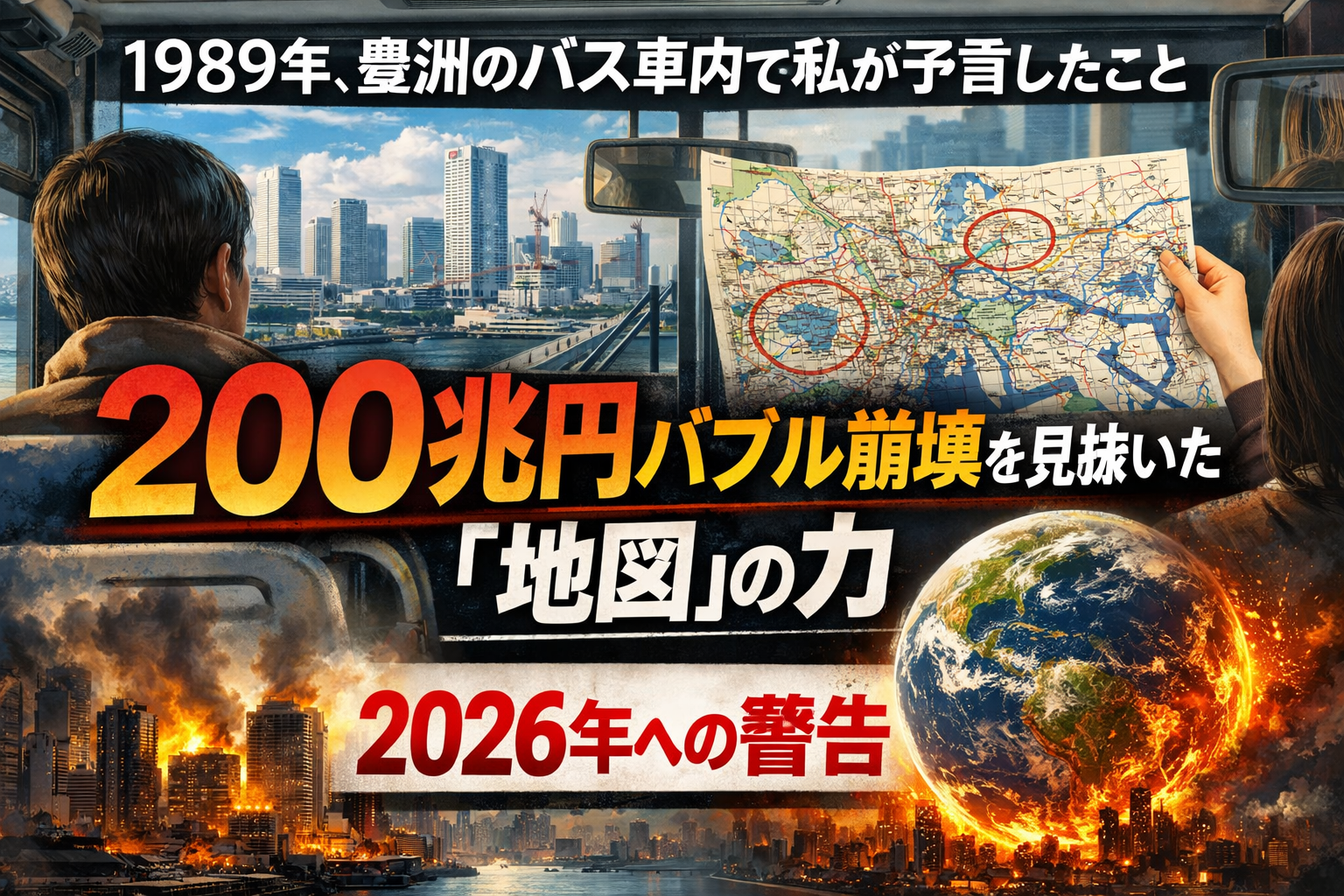
1980年代後半、狂乱のバブルに沸く東京。私は日興証券のバスに、世界中から集まったトップクラスのファンドマネジャーたちを乗せていました。 向かった先は、当時はまだ古い工場やドックが並び、人影もまばらだった「豊洲」。
多くの人が内陸の既成市街地に目を奪われている中、私は証券会館で有価証券報告書を読み込み、都市計画地図を広げ、ある確信を持っていました。容積率と賃料から算出したその場所の「真の価値」を、英語で彼らに語った時の驚きの表情を、今でも鮮明に覚えています。
2. 「ジャパン・アズ・ナンバーワン」の裏側で進んでいた策略
世界企業のトップ10を日本企業が独占していたあの頃。しかし、その華やかなバスツアーの裏側で、私は巨大な崩壊の足音を聞いていました。 欧米の政治家や官僚たちは「日本叩き」を画策し、円高への誘導、BIS基準の強化、時価会計の導入、そして土地重課税……。日本経済の「含み」を強制的に吐き出させる包囲網が敷かれていたのです。
私は当時のアナリスト部長と「これは大変なことになる」と危機感を共有し、レポートを作成しました。それが、後に200兆円規模の負債となって日本を襲うバブル崩壊の序曲だったのです。
3. 30年のデフレを経て、再び「あの景色」が見えてきた
バブル崩壊後、日本の大企業が手放した土地や社宅は外資の手に渡り、30年にわたるデフレが続きました。 そして今、時代は巡り、かつての日本のように中国が締め付けられ、企業が日本へと回帰し始めています。株価や不動産の上昇は、私に1990年のあの光景を強く思い出させます
English Version: The Strategist’s Perspective
Title: Beyond the ¥200 Trillion Collapse: Lessons from a 1989 Bus Tour to Toyosu
The Scene: 1989, Tokyo. The city was electric, fueled by the euphoria of the “Japan as Number One” era. I found myself at the helm of a private coach, hosting a select group of the world’s most elite fund managers. Our destination? Toyosu.
At the time, Toyosu was a desolate landscape of industrial docks and vacant factories—a far cry from the glittering skyline it boasts today. While the masses were fixated on the soaring prices of central Tokyo, I had been deep in the archives of the Securities Hall, meticulously cross-referencing corporate financial statements with intricate urban planning maps.
By calculating the “intrinsic value” based on floor-area ratios and projected yields, I presented a vision of Toyosu’s future that left these global titans in awe. I still remember the look of sheer astonishment on their faces as I articulated this strategy in English.
The Prelude to a ¥200 Trillion Crisis Yet, beneath the glamour of that tour, I heard the faint, chilling echo of a coming collapse. Behind the scenes, the global elite were orchestrating a “Containment of Japan.” Through the Plaza Accord’s currency shifts, the tightening of BIS capital requirements, and the introduction of punitive land taxes, the noose was tightening around the Japanese miracle.
In collaboration with my Director of Research at Nikko Securities, we authored a definitive report warning of the impending catastrophe. We saw the ¥200 trillion debt bubble for what it was—a house of cards about to meet its reset. What followed was three decades of deflation, where the nation’s crown jewels—land, buildings, and corporate assets—were liquidated and snatched up by foreign capital.
2026: The Cycle Returns History does not repeat, but it often rhymes. Today, as capital flees other regions and returns to Japan, the surging stock and property prices evoke a haunting sense of déjà vu.
While the market remains resilient for now, a true strategist never waits for the storm to break. To navigate this era, one must master the “Four Wallets Strategy”—a sophisticated equilibrium of real estate, global securities, and currency diversification between the Dollar and the Yen.
Success is not merely about wealth; it is about the wisdom to preserve it.